
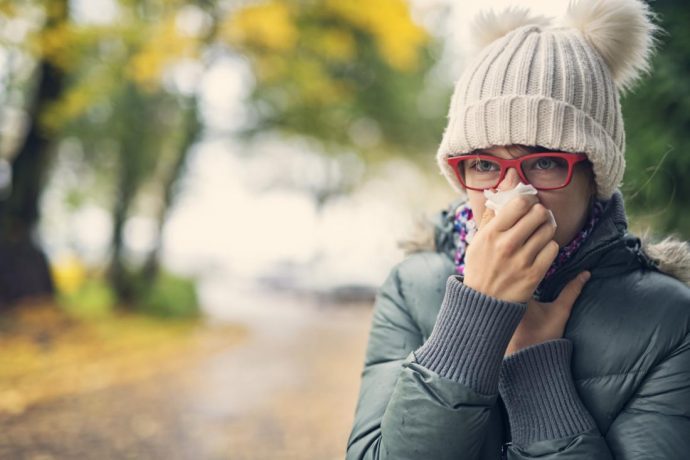
Some health problems, such as asthma, sore throat and cold sores, are triggered or worsened by cold weather.
COMMON COLDS:
- It is caused by more than 200 types of viruses, with coronavirus, adenovirus, and rhinovirus as the most well-known.
- The reason why colds are more common during cold days is because people tend to stay inside when it gets chilly out.
- Indoor air is trapped, so when people sneeze, others catch the viruses that come along with it.
- You can help prevent colds by washing your hands regularly.
- This destroys bugs that you may have picked up from touching surfaces used by other people.
- It’s also important to keep the house and any household items such as cups, glasses and towels clean, especially if someone in your house is ill.
SORE THROAT:
- Sore throats are common in winter and are almost always caused by viral infections.
- There’s some evidence that changes in temperature, such as going from a warm, centrally heated room to the icy outdoors, can also affect the throat.
- Another year-round disease that becomes more widespread when it gets cold.
- It’s either caused by bacterial/viral infection or throat irritation from low humidity.
- While not exactly a serious illness, it is nevertheless painful and annoying.
- If it becomes too unbearable to wait for the condition to self-terminate, one can take warm, clear, and neutral beverages as an alleviatory means or consult a physician.
ASTHMA:
- Cold air is a major trigger of asthma symptoms such as wheezing and shortness of breath.
- People with asthma should be especially careful in winter.
- The triggers for this congenital respiratory disease vary from one patient to another.
- To some who have it, cold weather is one of those – and a powerful one at that.
- Once triggered,asthma constricts the airways, causing difficult, short, and painful breathing.
- To prevent this, it’s advisable for asthmatic people to stay indoors and wear appropriate clothing during cold weather.
- Also, it’s best to carry doctor-prescribed inhalers in case, as an attack can happen anytime, anywhere.
NOROVIRUS:
- Also known as the winter vomiting bug, norovirus is an extremely infectious stomach bug.
- It can strike all year round, but is more common in winter and in places such as hotels and schools.
- The illness is unpleasant, but it’s usually over within a couple of days.
PAINFUL JOINTS:
- Many people with arthritis say their joints become more painful in winter, though it’s not clear why this is the case.
- Only joint symptoms such as pain and stiffness are affected by the weather.
- There’s no evidence that changes in the weather cause joint damage.
COLD SORES:
- Most of us recognise that cold sores are a sign that we’re run down or under stress.
- While there’s no cure for cold sores, you can reduce the chances of getting one by looking after yourself through winter.
HEART ATTACKS:
- Heart attacks are more common in winter.
- This may be because cold snaps increase blood pressure and put more strain on the heart.
- Your heart also has to work harder to maintain body heat when it’s cold.
COLD HANDS:
- Raynaud’s phenomenon is a common condition that makes your fingers and toes change colour and become very painful in cold weather.
- Fingers can go white, then blue, then red, and throb and tingle.
- It’s a sign of poor circulation in the small blood vessels of the hands and feet.
- In severe cases, medication can help, but most people live with their symptoms.
DRY SKIN:
- Dry skin is a common condition and is often worse during the winter, when environmental humidity is low.
- Because of the low humidity during cold weather, the skin easily dries up, causing it to itch and crack.
- As a remedy, one can apply moisturizer to stop the skin’s moisture from evaporating.
- Also, taking warm showers can help. Hot showers will not only worsen the condition, but also make your hair look dry and dull.
FLU (INFLUENZA):
- Flu is a major killer of vulnerable people. People aged 65 and over and people with long-term health conditions, including diabetes and kidney disease, are particularly at risk.
- The best way to prevent getting flu is to have the flu jab (or flu nasal spray for children aged 2 to 18).
- The flu vaccine gives good protection against flu and lasts for one year.
- This infection shares a lot of similarities with the common cold: they’re both upper respiratory tract infections, perennially present, and caused by a wide plethora of viruses.
- They also share a handful of symptoms: headaches, a clogged nose, and cough. Because of these likenesses, it’s easy to mistake one for the other.
- In order to know which is which,take note that influenza causes joint pains, body weakness, and fever that can reach up to 41°C.